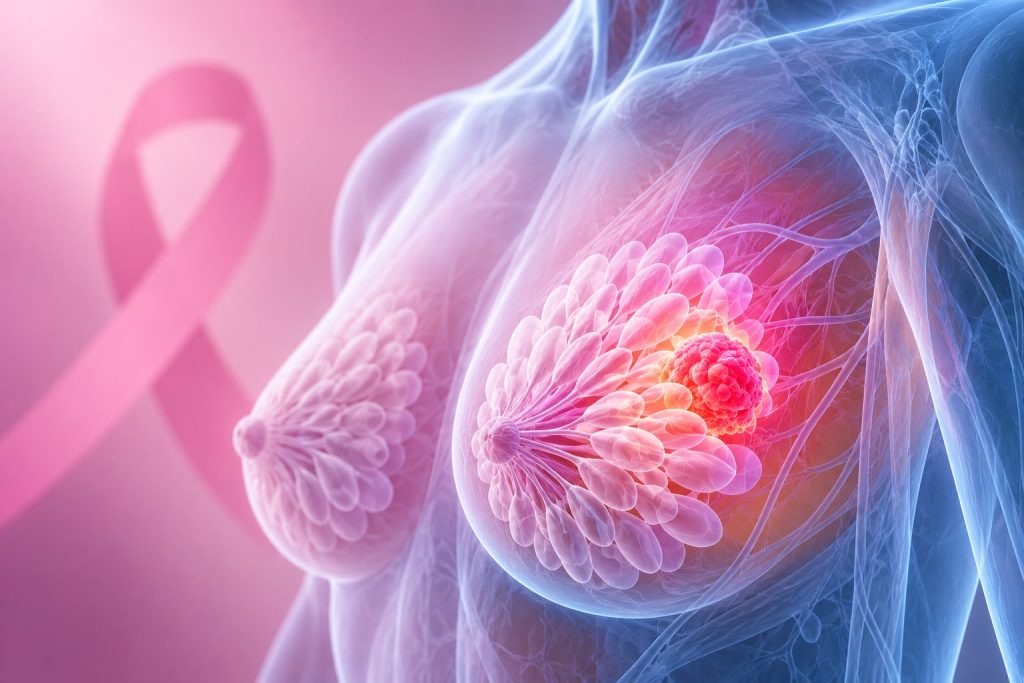
2.3 million women are diagnosed with breast cancer every year making it one of the most common cancers affecting women worldwide. Breast cancer occurs when abnormal cells in the breast grow uncontrollably and form a tumor. The disease most commonly begins in the milk ducts (ductal carcinoma) or the milk-producing glands known as lobules (lobular carcinoma).
However despite its prevalence, advances in awareness, screening, and treatment have significantly improved outcomes. In fact, when breast cancer is detected in its early stages, treatment is often highly successful. However, if left undiagnosed and allowed to spread to nearby tissues or distant organs, it can become much more difficult to treat and potentially life-threatening.
It is important to be able to identify early signs of breast cancer, to increase chances of treatment and cure. Many people associate breast cancer with a breast lump, but the disease can present through several other warning signs. A new lump or thickening in the breast or underarm is one of the most common symptoms, but changes in breast size, shape, or appearance should also be taken seriously. Other possible signs include nipple inversion, unusual or bloody nipple discharge, persistent breast or nipple pain, swelling under the arm, and skin changes such as redness, dimpling, thickening, or an orange-peel appearance. Some women may also experience itching, irritation, scaling around the nipple, or a persistent rash. Recognizing these symptoms early and seeking medical attention promptly can make a significant difference in outcomes.
Breast cancer is classified into different stages based on how far the disease has progressed. Stage 0 refers to pre-invasive conditions confined to the milk ducts or lobules. Stages I to III indicate increasing tumour size and involvement of nearby lymph nodes. Stage IV, also known as metastatic breast cancer, occurs when the cancer spreads to distant organs such as the lungs, liver, bones, or brain. Studies suggest that approximately one in three women diagnosed with early-stage breast cancer may later develop metastatic disease, highlighting the importance of early detection and ongoing follow-up care.
Major causes of breast cancer are mostly associated with age, genetics, and family history. However, lifestyle factors such as smoking, alcohol consumption, obesity, and physical inactivity can also increase the risk of developing breast cancer. While it cannot always be prevented, certain lifestyle choices may help reduce risk. Maintaining a healthy weight, engaging in regular physical activity, eating a balanced diet rich in fruits, vegetables, lean proteins, and calcium-rich foods, limiting alcohol consumption, and avoiding tobacco use can all contribute to better breast health. Regular breast self-examinations and routine mammogram screenings are equally important, as they can detect abnormalities before symptoms become noticeable.
The encouraging news is that early detection remains one of the most effective tools in the fight against breast cancer. Through awareness, preventive care, regular screening, and timely treatment, many patients can achieve successful outcomes and lead healthy lives.